Word by Word

Creating myself one word at a time.

Women working
A League of Their Own

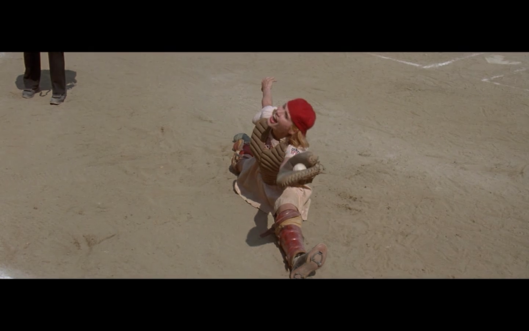
Dottie Hinson (Geena Davis) catches a ball in the 1992 movie “A League of Their Own.”

There is this iconic scene in the movie “A League of Their Own” when Dottie Hinson (played by Geena Davis) realizes that few people in the stands and media are paying much attention to women’s baseball and chose to catch a ball while doing the splits.

It’s that moment when you smile and think “You show ‘em girl!”

The other day, though, I read something that made me rethink my initial reaction to the scene.

I was reading R. Douglas Hurt’s massive book called “The Great Plains During World War II” and came to a chapter innocuously called “Women at Work.” That seems like a pretty harmless chapter. Well, I spent the next 30 minutes flipping from page to page, shaking my head.

If you spend just a bit of time with history you’re bound to learn something, but this something shifted my worldview.

In his book, Hurt described how women’s worlds changed during World War II. I knew that. Who hasn’t heard of Rosie the Riveter? Men were off at war and women needed in almost every industry. But, do you realize that they weren’t just doing “men’s” work? They were doing it better. Hurt explains:

“In January 1941, the Cessna Airplane Company employed only six women to work in the electrical department. After a month on the job they wired a half dozen instrument panels per day where two men had wired one every three or four days.”

They were way better in this situation. The company attributed their success to their “nimble fingers.”

What I learned as I kept reading was that women, in many industries, were doing work on par or better than men. Even with businesses and industries needing women workers, they still had a great fight to earn the same wages or even be considered for the work. Women who were older than 30, not feminine, married with no children had a hard time finding work. Of course, by 1943 employers couldn’t be picky anymore. Hurt writes:

“Shop foreman, one observer wrote, thought that women older than 30 were ‘too bossy,’ that they created ‘friction’ among the younger women, and that they got ‘surly’ about taking orders.”

The secretary of the Oklahoma State Board of Pharmacy thought women were employable as a pharmacist, but he doubted they could “stand on their feet as long as men.”

And if you were a woman of color, forget getting a job with the highest wages like other women.

That was the thing too. It was all about the wages. Women worked outside the home before World War II, but it was in low paying positions. Waitresses, cleaning women, and other jobs considered “women’s” work. World War II gave women the chance to break into jobs they’d never had before and to earn wages that only men earned before. Imagine the sense of accomplishment. The freedom.

The saddest part of this whole story for me? It was when the men came home, although the end of the war was something to rejoice. Women were expected to put down their tools. Exchange their coveralls for an apron. They had to give up all the accomplishment and independence they’d experienced for five years. Hurt tells us:

“One woman who left a job at an aircraft plant recalled, ‘Society looked down on women who worked outside the home.’”

Women working

Women working at the Douglas Aircraft factory in 1942.

Not only that, many women were called unpatriotic if they didn’t give their jobs to the boys coming home from war. Some in society worried about the destruction of family life if women didn’t return home.

It is hard for me, a person who has worked and earned her own money since the age of 16, to imagine losing the independence to do that. I’d like to thank the women of World War II who went out and worked harder, performed better and proved that women can do anything—even build a B-17 bomber.

Back to “A League of Their Own.” Dottie and her fellow players were great baseball players. They proved it, but they had to do the remarkable to get any attention. And when the men came back, the league was dissolved. Now, when I watch Dottie do the splits, I’ll think “women can do the remarkable, even build a B-17.”

Anna Karenina

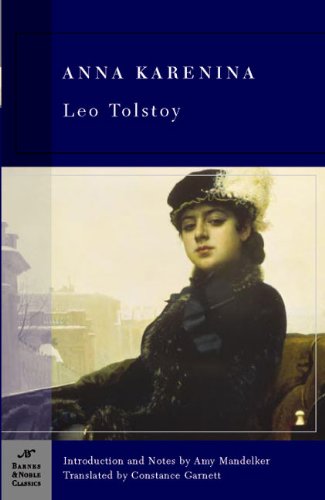
Anna KareninaI’ve been saving this book for the last few weeks. Maybe a little because I didn’t want to come off as one of those academic people who casually name drop classic literature. “Well, when I read ‘The Mill on the Floss’ it was the tension of Maggie’s desires and her circumstances…” So, I’m not going to do that.

My reading of “Anna Karenina” couldn’t have been less academic. It was my sophomore year of high school. If you’ve read any of my other posts, you’ll know that I was library aid when I could. Sophomore year was no different, except that I was library aid in the BEST library.

Stay with me while I take a short detour through Memory Lane. My high school was Balboa High School, in Panama (yes, the country), and it was in a great old Canal Zone building. The library was massive with beautiful oak shelves, tables, balconies and massive windows. And there was a huge selection of books. I got to spend a whole class in there, with only the librarian, everyday. Some days I shelved books. Some days I worked on the bulletin board. Then there were the days when I got to roam the library discovering books. That brought me to “Anna Karenina.”

I read this masterpiece with no teacher’s guidance and very little understanding of imperial Russia. I still can’t argue themes or literary technique used in the book. This book is also not for everyone. I’ve found that people either love it or hate it.

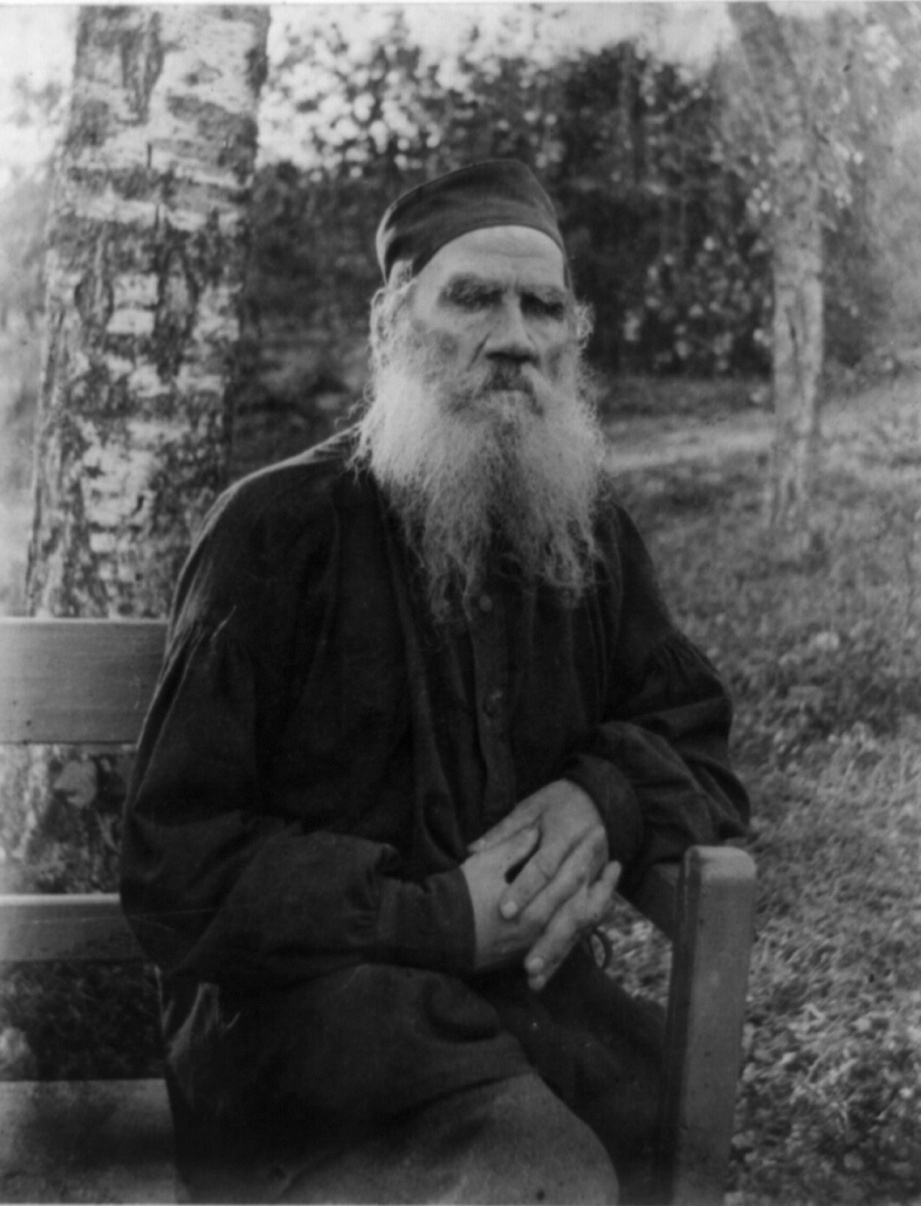
Leo Tolstoy

Leo Tolstoy by F. W. Taylor [Public domain], via Wikimedia Commons.

What I can say about this book is that it opened the world of classic literature to me. Tolstoy’s Anna was the most romantic figure I’d ever encountered—and tragic. I so wanted her story to end happily and most of the books I’d read to this point always ended happily. In Anna I found unhappiness and the reality of the world. Those are powerful things to find in your books for the first time.

While Anna and Vronsky intrigued me, I was also fascinated with Levin’s life. It was so simple in comparison and more satisfying. I cannot tell you that it had the effect of helping me avoid trouble or making mistakes a la Anna. It did set me on my eventual path to a degree in English and discovery of other great literature.

I’m so glad I wandered to that corner of my high school library, sat on the floor in a patch of sunlight and made my way through “Anna Karenina.”

Row 80

Row 80It’s only been two days, but I’m feeling good about my goals. Okay, well, the writing/researching portion. I’ve completed two hours of research so far this week and I already have another hour portioned off for tonight. That brings me to three and I’ve got another four days to go…feelin’ good!

This time researching is also getting me closer to reaching my NaNoWriMo goal. My aim is to have all my research done by October 20, so I can refine my outline and work on character development. I have to admit, I’ve been reading a lot of NaNo blog posts and they all have me scared to death. *wrings hands*

Now, the same is not true for walking. We will get up in the morning! We will…

I’ve also been able to meet my “eat with the family” dinner goal. I’ll have to miss tomorrow night due to a work meeting, but otherwise I will finish the week strong on this one.

Let’s go ROWers!


Row 80

Row 80There is nothing like public knowledge to keep you accountable to goals, unless you’re a politician. That’s for another blog post though. Thanks to my good friend, Nicole Evelina, I’ve discovered the “Round of Words in 80 Days” challenge.

Well, I’m joining the ROW80 team and aim to achieve a few goals.

First, I’m going to commit to working on my novel at least five hours each week. This may take the form of either researching or writing. I’m going to start out small this time and see if I can figure out how to make the writer life jive with work and family. If I can make it happen more than five hours—I will.

Second, my husband and I are committing to walking five days a week for 40 minutes. With all the “butt in chair” time that comes with working on the novel, I’ll need some feet to pavement time.

Third, I’m going to participate in National Novel Writing Month this year. This will require more than five hours of writing a week in November, but I’ll cross that bridge when I come to it. The measurable goal for this one? That I’ll win NaNoWriMo. That’s right…50,000 words. Whew! Please remind me that I did this willingly about November 20th.

Fourth, I’m aiming to have a rough draft of my current MS finished by the end of the year. In order to make this happen, I’ll have to do well with goals one and three.

Fifth, with all of this writing and the time it will take, I’m committing to eating dinner with my family every evening and discussing our day. It is one of my favorite parts of the day and I’m not giving it up.

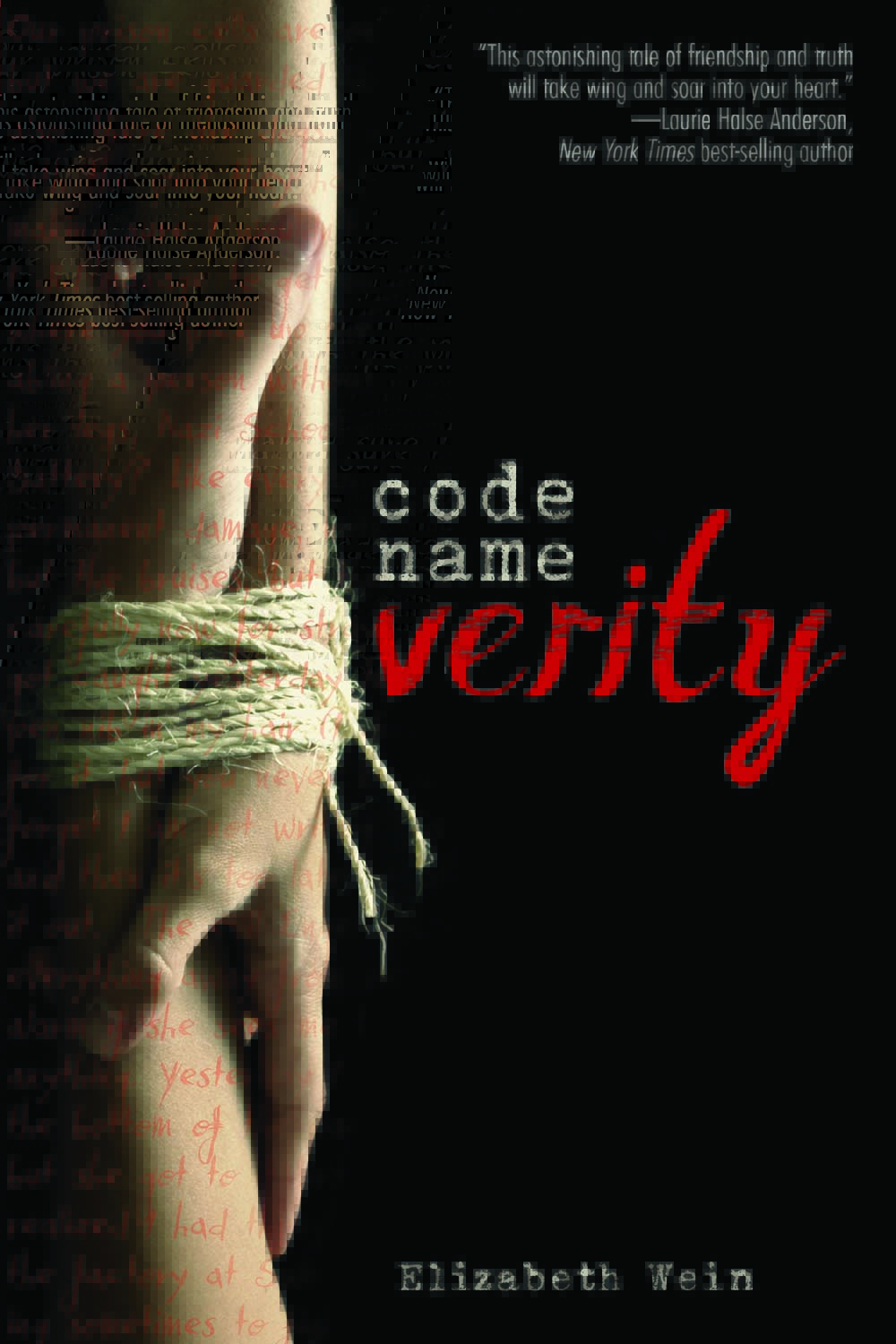
Code Name Verity
Code Name Verity

I listened to Code Name Verity by Elizabeth Wein on audio by Bolinda Audio.

There are some books with moments that take your breath away and Code Name Verity is one of them. I will admit my interest in this book was a bit of a slow burn, but it hooked me three chapters in.

A quick synopsis. The story centers on the friendship of two young British women involved in the war efforts during World War II. Like, seriously involved in the war effort. No working in the factories for these two. They choose to join the women’s air force, fly planes and become spies. Most of the story takes place during a six-week period in the fall of 1943, although we do learn about how the two met and became such good friends. The main events begin in October when a plane crashes in Nazi occupied France and the two girls are stuck. One girl, Julie or Code Name Verity, is there to complete a mission as a British spy and the other, Maddie, is trying to get back on a plane to England.

The point of view in this book is one of the most interesting things about it. The first half of the book is the story from the spy’s perspective. She is writing her story in a Nazi Gestapo prison. This is where we learn about how Julie/Verity and Maddie become friends and how they end up crashed in France. Sprinkled throughout Julie’s narrative are details about her imprisonment and her captors. She tells us about von Linden, the Gestapo commander, and his torture techniques. You learn about the two officers who keep an eye on Julie, a female German chemist, Engel, and a male French collaborator, Thibaut.

The internal workings of a Gestapo prison could be very dark, and there are places where you can feel the desperation and horror, but it is Julie, or Verity if you use her code name, and her humor and wit that keep the story light at times. Knowing she is writing her story after the events happen helps to create a little distance between the reader and some of the more difficult scenes with torture.

Elizabeth Wein does a fantastic job of capturing Julie’s loss of hope, but it is the hope that keeps you reading. She also explores the concept of truth. Julie writes that she has “told the truth.” The more I learned through the book, the more I questioned how anyone could know the truth. The whole key to the French resistance movement and the work of the British secret operations was no one knew too much of the truth because, no matter how much a spy might not want to cough up the information, with enough torture—or just the right kind of torture—a person may not be able to hold out. You’re left wondering just how much you can trust Julie and what you’ve just learned.

Then the narrator changes. The second half of the book comes from Maddie’s pilot journal. I’ll stop there for those who haven’t read the book. In the end, I cried my way to work as I listened to the last CD of this book. They weren’t tears of sadness, although there was some of that, they were more tears of “this is the end.”

As a young adult book, the language of this book was also fantastic. The young narrators use the lingo of the 40s and don’t hesitate talking boldly to the adults. I found myself wanting to use the word “beasty” all of the time. Just as with the realities of torture and the spy world, Wein also didn’t hesitate to pepper the book with language that is rough and suitable to the situation.

I’m currently trying to talk my 14 year-old into reading this book. She isn’t normally a historical fiction reader. However, the story Wein tells doesn’t feel historical, it feels like a true tale of friends—and that’s universal.

Glue

Glue“Some thoughts have glue on them. ”
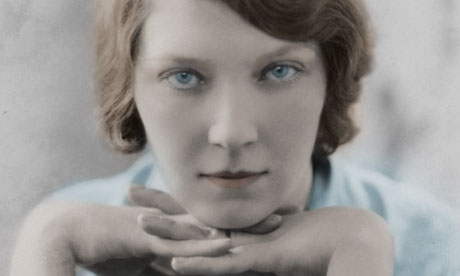
–Peter Hoeg

Those sticky thoughts usually end up being the ideas I write about. It’s good to have some sticky thoughts. Now, if only the thoughts about where I put my keys or why I went to another room would stick.

Old letters
Old letters

Photo by Jan Mary (www.janmary.com)

When I was in the fifth grade, my class took a field trip. Well, we took a few, but there was one that stuck with me. My family was living in Grand Forks, North Dakota, where my father was stationed at the Air Force base.

There was a local hero in Grand Forks and the surrounding area. His name was Carl Ben Eielson; he was an early aviator of the same pioneering spirit as Wiley Post or Charles Lindbergh. He died tragically in a plane crash in Alaska trying to deliver mail.

My elementary school was named for him, so my teacher decided we would all load onto a large yellow school bus and drive to Hatton, North Dakota, and visit his home town. We visited the cemetery where he was buried and then his home, where an Eielson relative gave us a tour.

One thing you should know about me is that from an early age my family vacations consisted of romps through cemeteries looking for ancestors and family members, so this field trip was much like a vacation.

The Eielson relative let a group of fifth graders have the run of the house. She let us interact with the items in this house rather than ushering us through it like a museum. A friend and I wandered to the attic and found a dusty corner near a gable window. In the niche was an old trunk and in the old trunk were maps, letters and journals of Eielson’s. We spent nearly a half hour reading through the documents.

I was enthralled. History, personal history, was sitting in my lap. My friend and I were as gentle as we could be with the documents, knowing even at that age we were privileged to hold those papers.

With that field trip, I was hooked. From that point on, I paid extra attention to my mother’s genealogy lessons. Trips to the historical societies weren’t nearly as boring. Romps through cemeteries in the middle of Great Plains’ territories were adventures. Conversations with my elderly living relatives drew back the curtain on eras long before me.

Unbeknownst to me, by exploring my past I was stumbling into my future. You see, genealogy research can only uncover so many details, a marriage date, a signature on a census document, or a cause of death on a death certificate. I found obituaries are usually a treasure trove of names and details.

Yet, there are so many unknowns there. The hopes, dreams and motivations of those people can only be guessed at now. When you hear a story of how a relative came to leave everything they ever knew and travel across the country or even the world, often the why is lost to the ages. The true love story of a young couple is now only a date and some pictures.

Family TreeThis is where my imagination has stepped in and started to wonder about the whys. This is where my passion for historical fiction has rooted itself: the everyday stories of everyday people with lives that may often surprise us if we take a closer look.

The following is a more general explanation of the story I’m currently researching and writing. In the future, I’ll post a more specific description. Ultimately, the tales and some family legends will find their way into my work as a way of honoring those who came before me.

Do you have family tales or legends that always come up at the family reunion? Are there any family mysteries in your tree?

Anne Lamott“Try not to feel sorry for yourselves when you find the going hard and lonely. You seem to want to write, so write. You are lucky to be one of those people who wishes to build sand castles with words, willing to create a place where your imagination can wander.”

Anne Lamott

**This will be my motto through the coming months of NaNoWriMo. Here is to shitty first drafts!

September 27, 2013

Wide Sargasso Sea cover

Published in 1966, this book brought literary fame to Jean Rhys only This 13 years before her death.

This is the continuation of a series of blogs looking back on the books that made an impression on me in my youth.

By the time I went off to college in 19…, well the year doesn’t really matter, I’d already read a fair number of books considered classics. You know the lineup: “Anna Karenina,” “Pride and Prejudice,” and “Great Expectations” just to name a few. One of the classics I’d read and enjoyed immensely was “Jane Eyre” by Charlotte Brontë.

I mean, what wasn’t to love? Shy, abused girl trying to make her way in the world. Dark, brooding owner of the manor. Gothic elements. And that whole “string attached to my heart” thing. Swoon!

Then I took a class my freshman year of college called “The Novel.” It was right up my literature-loving alley. You got to read novels…for homework…and then spend two hours talking about it…with other people who like to read. Swoon!

Okay, sorry, I digress. In this class, one of the professors assigned us the novel “Wide Sargasso Sea” by Jean Rhys. She said it was a prequel to “Jane Eyre.” It’s what might have happened before Jane, before the mad woman in the attic was “mad.” I was intrigued.

Jean Rhys blew my mind! There is another side to the story. I’d never thought to understand Bertha Mason’s back story. Rhys, who was born in Dominica, portrayed what it mean to be “other” in a society dominated by white males. There are a lot of literary theory and criticism words you can apply to this story: postcolonial postmodern. I call it eye-opening.

I will warn you. If Mr. Rochester is your dream guy, steer clear.

If, however, you like to have your views turned upside down and your paradigms shifted, “Wide Sargasso Sea” may be something you’d like to read.

Jean Rhys

Jean Rhys (1890-1979)

I went on to read “Smile Please: An Unfinished Autobiography” by Rhys and was impressed with the wit and sarcasm. Her life was one with ups and downs. Unlucky in love. Literary success late in life.

There is a piece of me that thinks Charlotte Brontë would have appreciated what Rhys did. I know I appreciated her opening my eyes to the other side of the story.