Word by Word

Creating myself one word at a time.

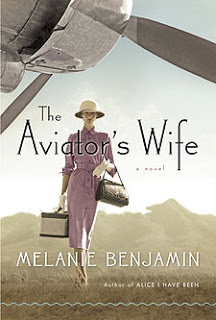
The Aviator's Wife

I read “The Aviator’s Wife” by Melanie Benjamin, narrated by Lorna Raver. Published in audio by Random House Audio.

I knew very little about the life of Charles Lindbergh and his wife, Anne Morrow Lindbergh, before “The Aviator’s Wife.” I had, as a child, seen the Spirit of St. Louis at the Smithsonian museum. My father is a pilot and we spent many hours in the Smithsonian’s Air and Space Museum. I had even heard of Anne’s book “Gift from the Sea” though I had never read it. An error I plan to correct soon.

I chose to read Melanie Benjamin’s “The Aviator’s Wife” because I read “Alice I Have Been” and was thoroughly enthralled by Benjamin’s storytelling ability—even when the story is a difficult one. There was a road trip I needed to make for work, so I checked out the audio version of the book from my library a few days in advance.

In short, this book tells the story of Charles and Anne Lindbergh’s very public marriage. It recounts all of the big events: their marriage, their pioneering air travel, the kidnapping and death of their child, and Charles’ unfortunate foray into politics. Those are all events that would put pressure on even the most solid of marriages.

The other story Benjamin tells though, and the one most compelling to me, is about the private relationship the Lindbergh’s had away from the flashing bulbs of photographers. It’s where we get to imagine what actually happened in the private conversations of, in today’s terms, mega stars.

Benjamin begins her tale in 1974 with Charles dying, but then we go back to the beginning of Charles and Anne’s relationship in the 1920s. Thus, the book follows a pattern of moving from the past to 1974 and back. I wasn’t sure how I would like this structure, the knowing where the story ends. However, when you’re dealing with a couple like the Lindbergh’s the end is already known. By revealing the moments before Charles’ death in 1974 in short tidbits between the longer trips to the past, Benjamin helped to increase my discomfort with their marriage. I knew she stayed married to him, even as you heard how he treated her throughout the early years. Truth be told, I was incensed that she did.

The Lindbergh marriage is not a love story. Some may argue that there was some love, but I feel very strongly it is the story of two people who entered into a contract. Charles needed a partner to help him continue conquering the skies and public life. Anne needed someone to recognize her for who she was and not just as the ambassador’s daughter. I could argue you with myself all night about whether Anne actually got that from Charles or if, in fact, she was just made over in the image Charles wanted.

Melanie Benjamin excels at telling stories which leave you wondering what emotions you’re feeling and whether they are the right ones. There was the feeling of pleasure when Anne would defy Charles—her spouse. Vindication when Anne took control of her life, found her voice and didn’t just wait for Charles to come home every few months. Disgust when Charles would talk sweetly to Anne because somewhere in my gut I knew it was because he wanted something. Yet, Charles and Anne were married, spouses. In the end, I felt a bittersweet sadness.

Not long after I finished this book, a commercial came on TV one evening. I can’t even remember which company the ad was for, maybe an airline. What I did note about the commercial, which contained a thank you to past aviators, was that Orville and Wilbur Wright made the list, Amelia Earhart made the list, Neil Armstrong and Buzz Aldrin made the list, but missing from it was Charles Lindbergh. Furthermore, so was Anne Morrow Lindbergh—a pioneering female aviator. This also made me very sad. I hope Melanie Benjamin’s book will bring Anne’s accomplishments back to public knowledge.

After writing this, I found out that “The Aviator’s Wife” was optioned for film. Congratulations to Melanie Benjamin.
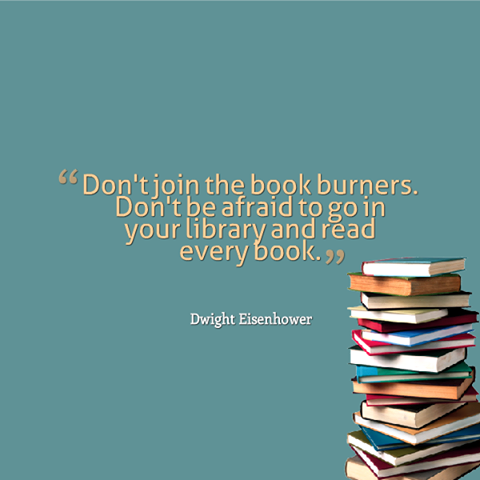
Banned books

A very cool graphic shared by my local PBS station, OETA.

I thought I would tell a little tale in honor of the American Library Association’s Banned Books Week. In 8th grade I was lucky enough to be library aide for one period during my school day. Yes, that’s right, I spent my days putting protective sleeves on paperbacks, shelving books and reading the new selections received in the mail. It was Nirvana for a Junior High student.

One day, the librarian asked if I would serve on the Parent and Student Library Advisory Board. Hmmm? What is this advisory board? It was a group of teachers, parents and ONE student who met once a month to review requests for banning books from the library.

I was SHOCKED. People would ban books from the library? So, of course, I said yes.

Once a month my mom would drive me to the school where I would meet with a group of five to seven adults. We had all read the books in question and reviewed the application for removal from the library.

More than once I spoke up and the adults listened to me. Not once in my tenure with the Parent and Student Library Advisory Board did we remove a book from the library. Not on my watch!

Dialogue image

Dialogue imageI talk—a lot. Just ask my husband. He would agree. I talk at work. I talk to my previously mentioned spouse. I talk to my children. I talk to my mother, sister, and father. I talk to my dog, some might say more than is healthy. I even talk to some inanimate objects.

I also try very hard to practice active listening as it is a part of the daily work I do for my employer. My goal is to listen and analyze what people are saying. It’s hard to not talk.

So, it should mean writing dialogue for my creative writing is a piece of cake. Wrong.

Writing dialogue is one of the hardest parts of writing for me. There are a flood of questions running through my head as I write. Is that really how she would say that? Was that word in use in 1934? How exactly should I work this tidbit of information into the flow of conversation? How can I make this character distinctive in his dialogue?

Most of the time I have to just shut off the running commentary in my head and let the characters speak. You know, quit second guessing them.

I’ve also read a few articles with some pointers about dialogue:

  • Be natural in dialogue. Let characters speak without complete sentences.
  • Try not to information dump in dialogue.
  • Understand dialogue is meant to help characterization.
  • Think about character speech patterns.
  • Listen to real people and how they speak to each other.

This last point has brought me to a realization. There is another element to dialogue —something I’ve picked up on through my daily work at my employer and it has become part of my creative writing process. It’s all of those non-verbal cues.

The quirk of a mouth as something is said that makes you believe the comment was more sarcastic than the words might lead you to believe.

It’s the squint of the eye or crossing of the arms that signals you to understand the person is becoming defensive.

Or maybe it’s the shift of the eyes away from the recipient of the words to indicate discomfort or downright lying.

The pause a person makes before they deliver their thoughts, which may mean what they are about to say could be a tough confession.

Dialogue quoteAll of the non-verbal movements and cues have to work with the stuff between the quotation marks or the whole conversation falls apart. I’ve started thinking about what the character is doing as they are talking. In order for the reader to understand what is really happening during a conversation, the writer has to give a full 360 degree look at the situation. I’ve read some very frustrating books where the dialogue is missing some of the non-verbal description and I usually end up having to reread conversations trying to figure out the subtext going on in the conversation…because you hope the dialogue has a purpose. As a reader, I always feel a bit silly when I miss the point of a conversation. I don’t ever want to make a reader feel silly. Adding non-verbal descriptions to dialogue scenes can help avoid this.

While I still struggle with over thinking dialogue (I’ve add links to some short articles that help remind me of what to keep in mind as I write), more often than not, I have to just ignore them and get the scene out. Then hope that in the revision process the rough stone can be polished into a glistening gem. Thank God for revision.

A few articles I’ve found helpful:

And, if you’re like me, you may want to practice. You know, put some of the lessons you learn into actual use. Practice does make perfect, or so I tell my kids. Not sure it’s always true, but don’t tell them. I found some writing dialogue exercises. You never know when those writing exercises may turn into literary gold.

Writer’s Digest “Conversational dialogue writing exercises” have been great.

Do you have great tips for writing dialogue? Any great resources? Please share them with me!

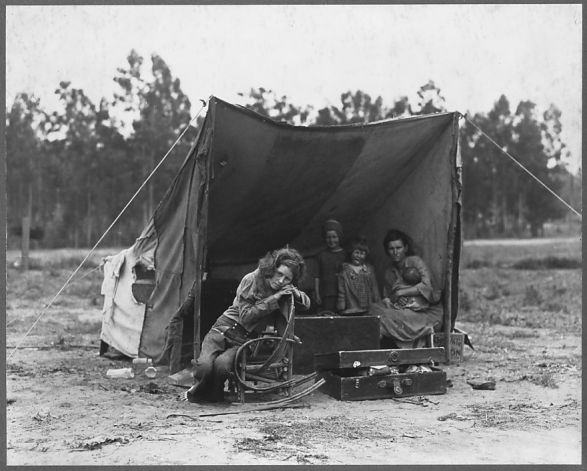
Family in tent

I love history. There are many things about studying history that I love. One thing I love is trying to grasp where humanity as been, understanding the way events and knowledge work together.

My love of history has married with my love of creative writing, which is why I tend to write historical fiction. In my research for my current work, I’ve been reading “Letters from the Dust Bowl” by Caroline Henderson. I mentioned her in a previous post.

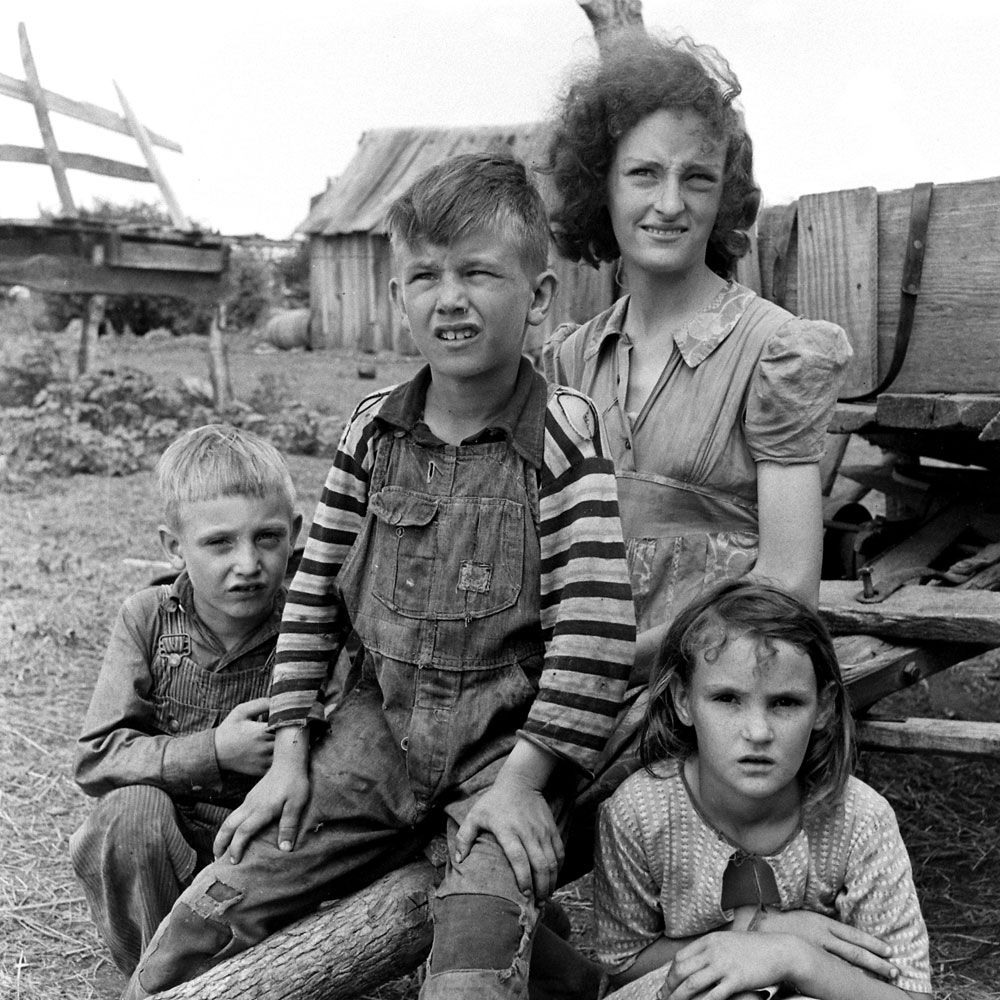
Family Dust BowlI read a passage tonight that stopped me dead in my tracks. It was a moment of clarity and historical perspective, especially if you’ve followed the United States House of Representatives recent defunding of the food stamp program.

Now, I make no claims of wanting to debate politics here, that’s not my purpose in posting this. My purpose is simply to connect the modern world with the writings of a woman in 1935. Caroline Henderson was a wheat farmer and wrote a letter to the Secretary of Agriculture, Henry A. Wallace, called “Dust to Eat” in July 1935. Here is only a small portion of that letter. I would encourage you to read more.

“Our personal hope is that eventually the limitation policy may give way to a more ample production program with storage facilities sufficient for all emergencies, planned on the broad basis of human need. A country blessed with America’s actual and possible wealth ought to feel humiliated by the thought of a single ragged, undernourished child…”

Family in tentCaroline Henderson was writing to explain the severity of the situation to the American public. Most of us know what the entire nation, and the world, were going through in 1935. I believe that those in leadership at the time were trying their best to get a nation, who had lost their spirit, back on their feet. We, in the 21st century, have the benefit of hindsight. There is power, though, in looking backward to the times before us and remembering when we, humanity, were at our best and when we were at our worst.

Caroline goes on to say:

“…we are glad for even one hesitating step toward what has been called ‘the American dream,’ the equalizing of opportunity so that even the humblest may be free to develop whatever native gifts he may possess…”

I’d like to believe that Caroline Henderson would look upon the opportunities we’ve made and taken with approval, but I also believe she’d agree that we have still further to go.


Anne of Green Gables

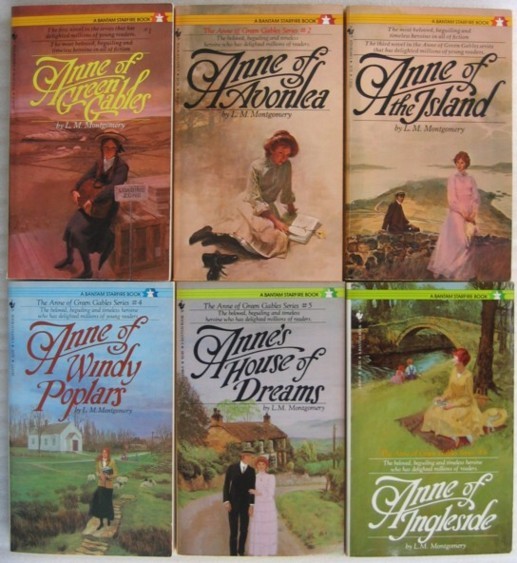
The Anne of Green Gables series written by L.M. Montgomery

If you’re of a certain age, say about 30 to 35 years-old, there is only one Anne Shirley. She looks a lot like the actress Megan Follows. There were two movies made when I was a young girl: Anne of Green Gables and Anne of Avonlea. I was about six or seven when the first film aired.

So, that means when I finally read Anne of Green Gables it was with Megan Follows and Jonathan Crombie as my own Anne and Gilbert. However, I soon learned that the world Lucy Maud Montgomery created with words and paragraphs was a much richer and nuanced world. The Anne Shirley found in those pages was, with no disrespect to Megan Follows, an Anne more layered.

Recently, I was the maid of honor in my dear cousin’s wedding. Those of us in her bridal party each chose our favorite love story, purchased the book, inscribed it with a note and gave them to her. I chose Anne of Green Gables.

I did not choose it because of the Anne and Gilbert love story. I chose it because of the love story between Anne and all the others in her world. Before Anne could have love with Gilbert, she had to learn what it was to love a family, friends and her community.

Marilla and Matthew taught Anne how to be part of a family and love without condition—and she taught them as well. It was a bumpy relationship for sure, but if you kept reading through the series it was a relationship that deepened and proved true family isn’t always a matter of blood.

Diana Barry, Jane Andrews, and even Ruby Gillis offer Anne the ability to find her kindred spirits. After all those years as an orphan, she finally finds people who, not only allow her imagination to soar, but want to soar with her.

Although Anne and Gilbert move on in later books, who can forget Avonlea as it is a character in its own rights. Avonlea. A place that teaches Anne the love of community and that sometimes community isn’t always so nice.

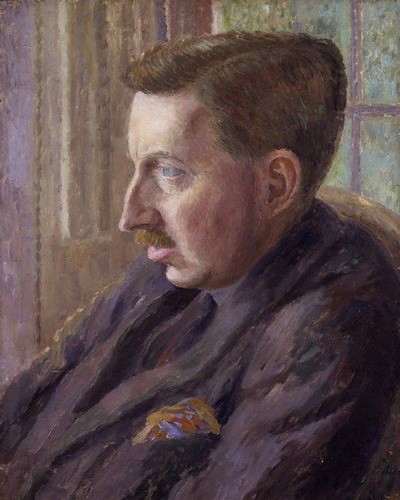
LM Montgomery

Lucy Maud Montgomery

Reading L.M. Montgomery’s Anne books also led me to some of her other lesser know, but just as good, books like The Blue Castle, Jane of Lantern Hill, the Emily series, and all of her short stories! Well, you get the point.

L.M. Montgomery taught me that imagination was more than okay, it was required to truly live.


P.S. While writing this post, I learned of an Anne book I haven’t read as yet. I’m giddy to return to this world!

Exploring the books from my past.

I went through this whole phase where I was a total book snob. If the author hadn’t been dead for at least 50 years, I wasn’t going to read it. In the last few years, I have returned to current day writing and I am so glad I did. There are fantastic writers giving the world amazing work.

There was a time before college, though, when I was reading current popular fiction. In high school I was a voracious reader with access to the entire school library as the library aid. Do you know how jealous the other students were that I got my hands on the new stock before they did? Yeah, they weren’t, but still.

John Grisham's The ChamberOne of the books I read my junior year was John Grisham’s The Chamber. I’d read The Client, The Pelican Brief (and loved this movie) and Time to Kill…well, I’d read most of his books published before The Chamber.

But, The Chamber was different. I felt this book and it’s topic in my gut. You want evidence of just how deeply? I still remember the day I finished it. Stupidly, I read the last pages on the bus home. As my bus pulled up to my stop the Panamanian afternoon rain started pouring. I trudged uphill in the rain forest sobbing. As I entered my house drenched and distraught, my dad saw me and immediately came to me.

“What’s wrong, Courtney?! Are you okay? What happened?”

“They…they killed him!”

“They killed him? Who killed who? Where did you see this?”

“No, no. They killed Sam.”

“Sam? Who is Sam?”

I thrust the book at my father. “Sam. I can’t believe they killed him.”

“You’re sobbing over a book? A book?”

And, I’m not sure I was crying because Sam died. I think I was crying for the choices: the choices that caused the brokenness for Sam, for his family and for his grandson Adam. In the end, Sam had made poor choices that took him down a very dark path.

“Look at me,” he said, glancing down at his legs. “A wretched old man in a red monkey suit. A convicted murderer about to be gassed like an animal. And look at you. A fine young man with a beautiful education and a bright future. Where in the world did I go wrong? What happened to me? I’ve spent my life hating people, and look what I have to show for it. You, you don’t hate anybody. And look where you’re headed. We have the same blood. Why am I here?”

This book did more for me than just highlighting how choices made today can impact many future tomorrows. In my world, I’d never given much thought to the death penalty and what it means. Grisham delivered a book that made you think about crime, punishment and the impact it has on society. Is state-sanctioned death murder? Who are the people on death row? What circumstances brought them to that point?

I would go on to explore more of these issues as I got older and studied political science in college. There have been fellow students who have gone on to write their doctoral dissertations on the subject. We’ve had lively debates and deep conversation on the subject. But, always in the back of my mind I’ve tried to remember that these are people. Granted, they are people who have made poor choices, but they are people with their own stories.

There are some who have committed heinous crimes, some who are on death row when they have been falsely convicted and some who once in jail have repented of their sins. As a society, we have to ask ourselves whether we believe that more violence will just beget more violence.

Those who believe that fiction does not have an impact, I offer you the example of The Chamber and its impact on me. I still remember it 17 years later.

I found this little gem while researching for my novel. It comes from a collection of Caroline Henderson’s writings in a book called Letters from the Dust Bowl.

“In reality, education can only be attained by personal effort, and should be for each a continuing process, ending only with life itself, or possibly then just well begin. There are fortunately many roads to personal culture and usefulness, and not all lead through the college campus. Some go by solitary ways and some by the crowded ways, where the struggle of life is keen and exciting. Where ever the road, the most important thing is our heart’s desire that life may teach us some portion of its truth, that we in turn may give back of what we have for the enrichment of life again.”

She wrote this in 1918. Word.