Word by Word

Creating myself one word at a time.

City of Jasmine

It was one of those books where you let out a pleasant sigh at the end. Or maybe you’re panting from the non-stop action. Can a book’s ending ever give you both? If it can, then “City of Jasmine” is that book.
City of Jasmine

City of Jasmine by Deanna Raybourn

I stumbled upon Deanna Raybourn’s book “Night of a Thousand Stars” late in 2014. It was listed on an “upcoming books we’re excited about list.” I picked it up. I loved it. As with all of you, my TBR is large, so I never made it back to other Raybourn books. Big mistake.

While I still stand by my 5 star rating of “Night of a Thousand Stars,” I wish I could give more to “City of Jasmine.” Both books are big on characters and setting. So much so, that I can’t decide which was better executed by Raybourn.

The star of “City of Jasmine” is really the country of Syria and the city of Damascus (just like “Night of a Thousand Stars after it). The magic of that city with its hidden courtyards, bustling souks, calls of prayer broadcast over its rooftops and the amazing people. I won’t get started on the food in this book, but needless to say I wouldn’t mind a companion cookbook. “City of Jasmine” captured everything about Damascus, and Syria, that I loved from my own travels there, but added the history and intrigue of the Levant in the 1920s.

Not only does Raybourn offer you all of this luscious setting, but she gives you characters enmeshed in the political turmoil of their day. Complicated characters who do and say things you wish they wouldn’t, but are only human. Characters as flawed as their time period after the destruction of WWI. A woman, Evie Starke, coming through a period of journeying to become who she must and a man, Gabriel, struggling to deal with decisions he’s made. And it is a delicious ride Raybourn takes her characters on through the air in Evie’s plane and on the camels of the Syrian desert.

Really, it’s a masterful combination achieved with stunning setting, flawed and loveable characters and a large helping of adventure, the perfect recipe that every author looks to create.

Night of a Thousand Stars

Night of a Thousand Stars by Deanna Raybourn

The plot centers on Evie Starke, a self-made aviatrix of the 1920s, who has spent five years coming to grips with the death of her husband, an adventurer said to have died during the sinking of the Lusitania. Their short love story, a four month marriage beginning on the night they met, was tempestuous and was headed for divorce when he died. Raybourn makes it no secret that Evie is still struggling with the lack of closure in their story. Things become complicated when she receives an anonymous note that contains only one thing…the only thing that could make Evie alter her current world tour by plane…a current picture of her dead husband. From there, the ride only becomes wilder with twists and turns to match the old city of Damascus itself.

I’m not sure I can recommend this book highly enough. You should then read “Night of a Thousand Stars.” After reading both, I’ve learned there is a prequel novella called “Whisper of Jasmine” that I’ll be downloading later. In addition, I’ve also started Raybourn’s Lady Julia Grey series that has hints of Tasha Alexander’s Lady Emily books. They are a smart, Victorian read.

Happy reading!
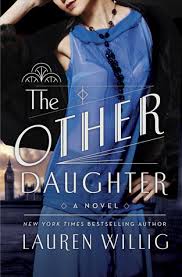
Cover art
Cover art

The Other Daughter by Lauren Willig

It’s always a good day when you get a book in the mail. Even better when it’s an ARC you receive in exchange for a review. And on top of a free book, it’s a free Lauren Willig book! I’ve read two of Willig’s books, That Summer and The Ashford Affair, both of them stand alone books like The Other Daughter. Willig is probably best known for her Pink Carnation series, which I haven’t read.

And, to be honest, I would totally pay for The Other Daughter. It was a great read, as I found That Summer and The Ashford Affair to be as well. But let me back that up with some proof!

Quick recap.

Rachel Woodley, 27 years old, is a governess working for the families of 1926 France. She’s called home to a small town in England when word comes that her mother is ill with the Spanish Influenza. Upon her return, she finds she’s too late to say goodbye or even attend the funeral. She believes she’s alone in the world since her father dies when she was four. Through a series of events, she discovers that her father is, in fact, alive and well. Oh, and an earl. She is angry at the betrayal her father committed and the new family he established. Thus begins Rachel’s “stunt” in London, taking on the persona of Vera and trying to determine if revenge should be exacted upon her father and his new family. What will she do and can she maintain her integrity through the process?

From the beginning I noted Willig’s ability to place our feet in two different worlds. As with those who read any literature written in or about the 1920s will know, it was a time of great fluctuation. The First World War decimated a generation of men and women. The social structures are collapsing. Excess and escape are the goal. Willig’s use of short sentence structures and prose moves the plot along at a steady pace. It’s reminiscent of the music and literature of the time.

Willig made me feel the struggle for meaning in the 1920s anew with Rachel’s transition from Victorian-era governess to party girl of London society. Rachel’s battle throughout the book is to find who she will be in this new social structure. Her struggle, while totally believable in the setting of 1926, is something I identified with as a woman in the early 21st century. Striking out on your own and finding a way to get the education you need. Finding a balance between being a strong female, yet maintaining a sense of yourself.

The theme of memory was intriguing throughout Rachel’s story. As expected, when Rachel’s life is turned upside down by the discovery her father is alive and has a whole life she never knew about, she begins to question the memories of her early life and the life her mother built after her father’s alleged death. Through the middle of the book Rachel allows her grasp of memory to grow hazy. She embraces the “escape through excess” mentality as she searches to figure out where it leaves her. The resolution of this is to take her past for what it is and build a new future that is her own.

The highlight of The Other Daughter though is the relationship that builds between Rachel and her Pygmalion, Simon. The witty repartee and tension between the two is fascinating. Willig does a fantastic job creating a twisty path to the end of the book.

And the end? So very satisfying. The Other Daughter is a great read from an author with a great track record.

Interested in other 1920s reads? Dollface by Renee Rosen is great. Night of a Thousand Stars by Deanna Raybourn is magical.

Counterfeit Heiress cover

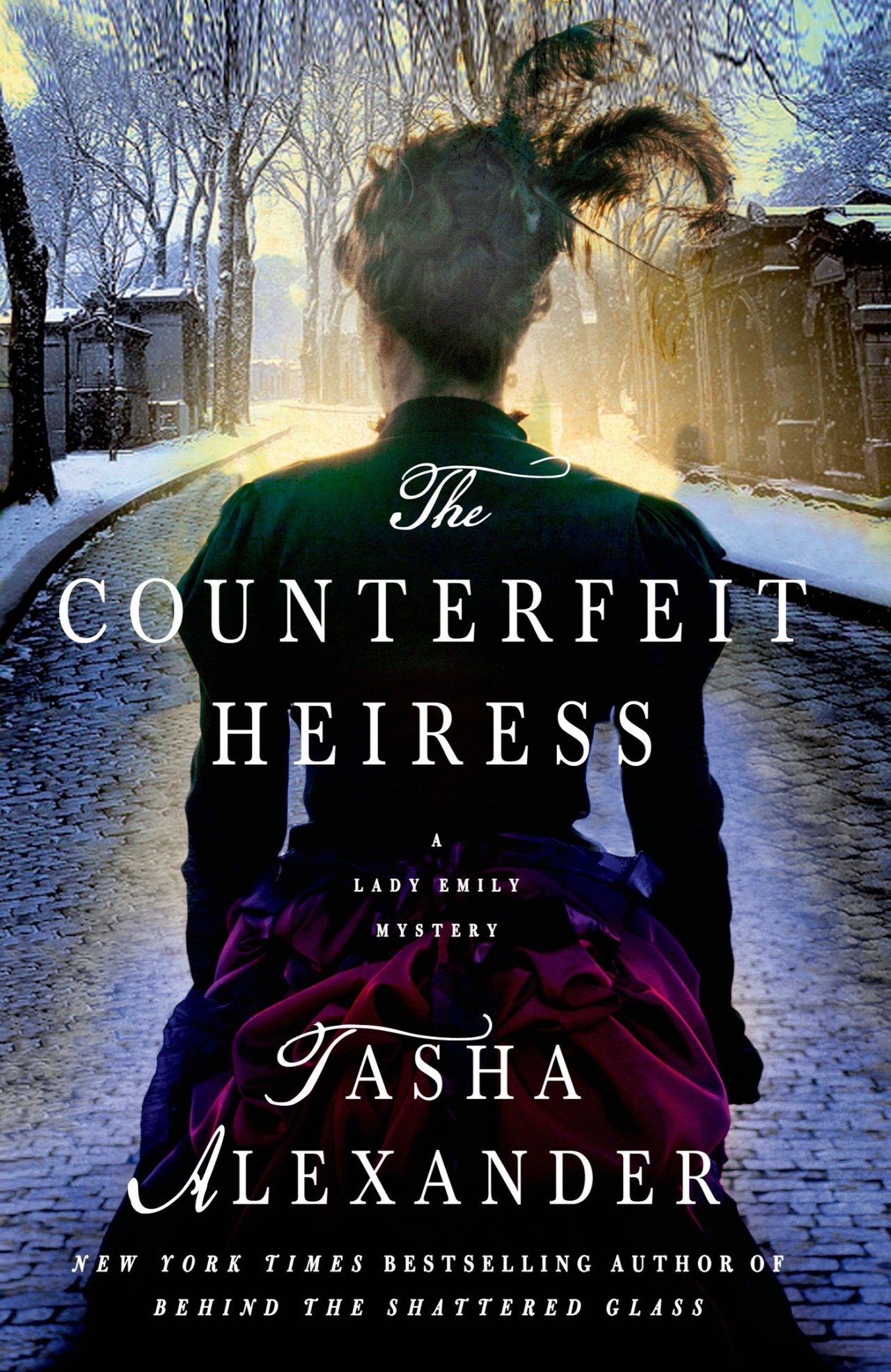
Counterfeit Heiress coverI’ve been madly reading the Lady Emily Mystery series from Tasha Alexander over the last few weeks. According to my Goodreads shelf, I finished the first in the series in mid-August. So, I was very excited when I won an ARC from Goodreads of the ninth Lady Emily mystery that comes out in just a few days, “The Counterfeit Heiress.”

Not too long ago I wrote a post about the fourth book and how I loved Alexander’s ability to allow her characters to mature and change, but still maintaining the core personality I’d come to love. I’ve had to remember that I’ve read seven years of Emily’s life in only two months and a person can change considerably over seven years. There were moments in the last two books, “Death in the Floating City” and “Behind the Shattered Glass,” when I had moments of wondering about where Lady Emily and Colin were headed. There was also a lot of coincidence, but that is another issue altogether.

With “The Counterfeit Heiress,” Alexander found a great stride for her characters. There seems to be balance in Lady Emily’s life. She and Colin have settled into a great arrangement and division of duties. He respects her opinion and only asks that she take no unnecessary risks. She, in return, trusts Colin to bring her into a case and advocate for her involvement when Scotland Yard or local police balk at a female investigating murder. They are both now also focused on being parents to three young boys.

The other layer to any Lady Emily story is the case the Hargreaves investigate. Now, I mentioned earlier there were moments in the last two books where coincidence sometimes gnawed at my ability to stay inside the mystery. With “The Counterfeit Heiress,” there is little of that. The case was engrossing! Here’s a short summary.

Lady Emily and Colin are in London for the Season. Lady Devonshire, the premier hostess, is giving a fancy dress ball in honor of the great Queen Victoria’s Jubilee. Fancy dress ball is code for costume party. Word at the ball is the reclusive heiress Estella Lamar is in attendance and Cécile (I was so glad that Cécile was back) wants to see her old friend. A friend that no one has seen for more than 15 years due to her exotic world travels. Yet, when Lady Emily and Cécile find the reclusive women she is not who she says she is. When the imposter shows up dead not far from the ball’s location, Lady Emily and Colin are called on to solve the murder. What follows is a mystery that goes further and is much creepier than a murder. Where is the real Estella Lamar? Why was a woman asked to impersonate her? 

Fans of Lady Emily and Colin’s relationship won’t be disappointed as I stated earlier. And, did I mention that Cécile is back? I adore her. Along with these three, we also get to see Jeremy, Duke of Bainbridge, pursuing his title of the most useless man in England, although, he made himself most useful during this investigation.

Alexander also always offers an array of interesting characters for her case. As is the pattern with her other books, Alexander injects short chapters from the perspective of a character key to the case being solved. In this case, we get to see aspects of the case from Estella’s perspective. It is a dive into the personality of a person so socially awkward it was heartbreaking at moments. It was a slow descent into madness. Don’t get me started on the dolls. Shivers! Don’t forget to read the author’s note. It only increased the creepiness factor.

Alexander delivers a wonderful addition to the Lady Emily mystery series. She also dangles a tidbit of information in the last page that will have every fan of Jeremy gasping in surprise. Who is Christabelle Peabody? I know I’ll be reading the next book to solve that mystery!

That Summer

That SummerThere are times when I grab a book, knowing very little about in, and read/listen to it because I needed something and it was available at my library. Not too long ago I was traveling to some not-so-exotic location for work. I had a drive ahead of me and needed a quick audio book to download and enjoy (I also listen to them to help increase my books read each year because I’m competitive and hate it when my friends reach their challenge before me).

That’s how I discovered “That Summer” by Lauren Willig. It was audio and it was available in the historical fiction section. I wish I could say I had a gut feeling about the wonderful story I was going to discover.

Turns out it is a dual time period book. I’m a sucker for dual time period. Willig weaves together two stories, one in 1849 and one in 2009. The modern story centers on Julia Conley and her life, which isn’t going anywhere fast. Her mother died when she was young. Her relationship with her father and stepmother isn’t great. She’s lost her job and can’t find another. Then she inherits a house in London from an aunt she didn’t even know. What does she have to lose? She hops on a plane and heads across the pond where she meets family she hasn’t seen in over twenty years and uncovers a family history that sucks her into a mystery and a hunt for the family treasure.

The story in 1849 focuses on the miserable life of Imogene Grantham. Stuck in a loveless marriage for ten years, she plunges into a relationship with an artist who visits her husband’s house one evening.

I can’t imagine it’s easy to write dual time period stories; weaving together two time periods which are so very different and making connections with items, emotions or parallel tales. Even harder? Making sure both stories are engrossing. Willig achieves at both. While it was easier for me to connect to Julia because of her modern setting and sensibilities, I was drawn into Imogene’s plight with the same level of intensity.

DanteGabrielRossetti

An early self-portrait done by Dante Gabriel Rossetti, who makes an appearance in Willig’s “That Summer.”

Each woman faces the desire for rebirth from a situation that seems hopeless. And Willig really makes you feel the deep well of emotion for both Julia and Imogene. In the end, I think Imogene’s story made me feel the most claustrophobic. This makes sense because, well, I am a modern woman. Her lack of control over her world made me angry at moments. And, I’m pretty sure, that’s what Willig wanted the reader to feel.

The theme of rebirth is given an interesting treatment in “That Summer.” I think it may be one of the reasons I enjoyed the book so much. Each woman, Julia and Imogene, must face it. There is fork in their proverbial roads and learning how each comes to terms with their past mistakes and decides to move forward made for a fascinating read. And Willig offered surprise results for these women. I won’t spoil the surprises. Needless to say, things weren’t easy for our main characters.

There were moments when a couple of characters fell a little flat for me, but they weren’t central to the story. Other characters, not Imogene or Julia, did leap from my speakers as the narrator read “That Summer.” Willig captured the zest for life and art of the Pre-Raphaelite Brotherhood in 1849. She also created a nuanced and complicated relationship for Julia with her father. So, while a character may have felt a little flat on occasion, the characters who mattered came to life for me.

The ultimate lesson I learned? Venture off the “to be read” list everyone in a while and see what books chance throws my way.

Books as escapeThere are periods of time in one’s life which seem to no longer belong to that person. You look up and a month has passed. Or your plans to finally work toward that goal on your list are thwarted by some emergency or need of a loved one. Even more fun are the times when you do have a few hours and your are the master of your time and you’re so mentally fatigued that you feel the need to recharge.

And so, I’ve found my mind scratching itself raw.

The best solution in these situations, or so I’ve found in the past, is to lose myself in another world. Escape. Now, sometimes you can find real escape. A day hike. A day trip to some city or town you’ve never visited before.

But, being the book person I am, I’m always thrilled to have a new world to immerse myself in for a couple of hours each evening. And if life is really taxing, over a lunch hour.

This latest spate of mental rawness has been relieved with two new discoveries in books and television.


Tasha Alexander book

The fourth book in Tasha Alexander’s Lady Emily mysteries. A fun romp through Constantinople at the twilight of the Ottoman empire.

Lady Emily mysteries by Tasha Alexander

I was perusing Facebook the other day and Michelle Moran, an author of some of my favorites and someone you should check out, posted on her timeline about the release of a new Lady Emily mystery by Tasha Alexander.

A Victorian female sleuth? Color me intrigued. So, I hoped on my local library’s digital site and there was the first in the series. It is safe to say I was hooked in the first two chapters. Alexander introduces us to Lady Emily Ashton, a young widow who is only two years out of her first season in London society.

The Victorian woman is an interesting one. Women who were continuing to question the inequalities of their society, yet living within them because to be ostracized could be worse than death. These were the mothers and grandmothers of the women who would know what it meant to vote.

Lady Emily is a widow though. Alexander explains in a short note at the end of her first book why she chose to make Emily a widow. Widows are given a tidge more freedom. Just a tidge. They are also expected to react badly to the grief of losing their husbands. And Lady Emily takes full advantage of these things.

Having just finished the fourth installment of the series, there are a few things I really admire about Alexander’s writing.

Her ability to carry her characters through tough emotional situations and questions and they are not all neatly resolved and tucked away. Instead, Alexander brings the character through the emotion. Trust me. When you get to The Fatal Waltz, book three, you’ll feel me on this one. Whether it’s the intricacies of maintaining friendships with other women as you age, and who hasn’t dealt with this one, or the tough relationship with a mother whose expectations are chafing. Then there are the complicated relationships between men and women in an era when the separation of the sexes was taken very seriously.

Related to this, is Alexander’s willingness to allow her characters to mature and change. This is a tough one. You are drawn into a character because of who they are in the first two chapters. Yet it is important in a series that they change. Life is not static and no character should be. But, it is a tricky business changing much loved characters. Will every reader love every direction taken? No. They won’t. Are there moments when I slapped my head at Lady Emily’s mental thought process? Yep. But, I have those moments with my thought process, too.

One more thing. Alexander takes Lady Emily’s relationships with the women in her life very seriously. I enjoy the interplay between Lady Emily and her mother. Her best friend Ivy. Her new friend Margaret. Her eccentric friend Cecile. Each friend (and mother) draws something out of Emily and pushes her. There is great respect shown here to the relationships between women.

There is, of course, the beauty of the mystery in each book. They are a fun diversion, along with the lives of Lady Emily and her friends.


Miss Fisher’s Murder Mysteries

Miss Fisher

The titular Miss Fisher, a character based on Kerry Greenwood’s novels.

Thanks to my dear friend, Niki, and her parents. I found a new guilty pleasure to watch. The series, which is produced in Australia, is available on Netflix. Go watch the first episode…I’ll wait.

Are you hooked? I was. The hair. The clothing. The cars. The home decor. The music. I love it all.

Yes, you can draw the similarities between this and Lady Emily. Women. Detectives. But, really that’s where they stop.

I’ve read the first few books in Kerry Greenwood’s series about lady detective Phryne Fisher in 1928 Melbourne. They are good. I enjoyed them. But, the television show brings 1928 to life on the screen. I know, I know. I can read what I’m writing. I may be a bigger fan of the show then the books.

I have three episodes of series one left. I have no idea where I’ll get my hands on series two because Netflix doesn’t have them as yet. You may want to solve this problem before you get hooked.


And so, in moments when my mind is scratching itself raw from the stress of life, I’ve found a few diversions to help me escape for a few moments. A few precious moments. Whether the drawing room of a Victorian widow or the dance halls of 1928 Melbourne, both of these lady detectives are very diverting.


Butcher Shop
Zamalek Skyline

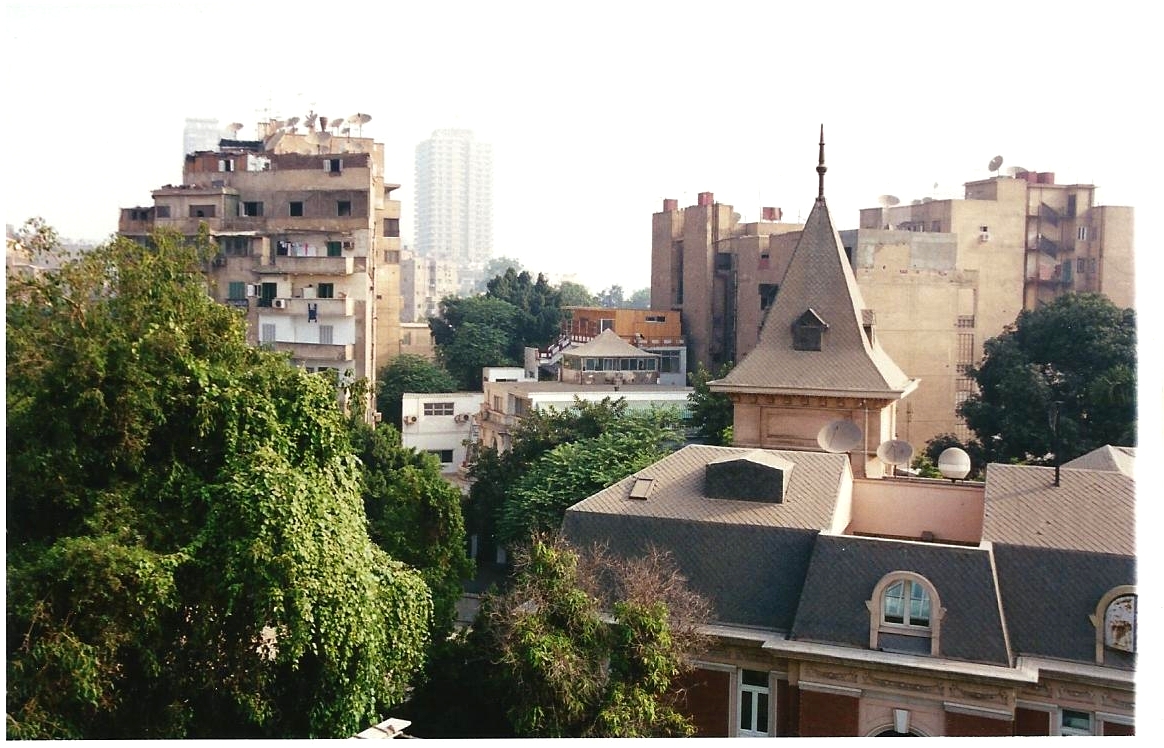
The skyline from my flat balcony. In the lower right corner you’ll spy a part of an embassy. Photo by Courtney Marquez

Picture it. The Nile River serenely floats through the middle of Cairo. Sitting in the middle of the Nile is an island called Zamalek. It is the home of small embassies, short lanes with four-story buildings and many small restaurants—including the best schwarma stand ever. Along with the gelato shop and an amazing Italian joint, there are also small shops, bakeries, produce stands and tea shops.

In short, it is a corner of the world where neighbors know each other and you quickly befriend the nearest bakery owner. Beautiful and not at all what you normally see in pictures of Cairo, Egypt. My flat on Hasan Assam overlooked the backyard of the Spanish Embassy where they threw some swanky parties. We’d watch them from the balcony.

It also happened to be home to an unforgettable moment between me and a cockroach the size of a small dog. But, I’ll get to that in just a few moments.

Within two weeks of arriving in Cairo, my flat mates and I arranged for a weekly delivery of toilet paper and water—you know, the essentials. They deliver anything you want in Cairo. The gelato shop down the alley from my flat would even bring over a cone of the most delicious hazelnut gelato when we had the craving. The lack of delivery of such important items in the U.S. is quite disappointing.

Ice cream and toilet paper aside, each of us in the flat would shop every few days for the items we wanted. And shopping in Cairo was different from the massive buildings in the U.S. where everything you might need, or not, is under one roof.

I had a normal bakery where I would get these delicious loaves of bread baked freshly each morning. There was a produce stand two blocks over where I got my eggplant and cucumber. There was a very small corner store with feta cheese, milk, cookies and other items you might need. There was also a butcher stand, but I didn’t visit it very often. I wasn’t one for watching my chicken butchered right in front of me.

Breakfast each morning, in my flat, was a small roll of bread with feta cheese and sliced cucumber. And on more than one occasion, you would find three of us in the small kitchen scorching the skin of a beautiful eggplant to make homemade babganoush.

Now, the cockroach story.

Within two months, weekly shopping was no big deal. Just part of a normal routine. But, when I started I was very aware of my otherness. My Western clothes. My Western attitude. And it drew the attention of the neighborhood residents.

Butcher Shop

One of the many neighborhood butcher shops in Cairo.                    Photo by Courtney Marquez.

One bright day, about ten in the morning, I was strolling alone up Ahmed Sabry where my normal shops were located. I had two loaves of bread fresh from the bakery in my bag. Men sat on crates in their flowing robes. You could hear the newscasts coming from the tea shop as cabs flew up the street. The songs of Amr Diab floated from stopped cars.

As I walked past a produce stand, on the way to my market for feta cheese, I noticed a very large cockroach sitting below a stand of cabbage. Now, I don’t know what went through that large bug’s tiny brain, but as I walked past in my khaki pants and spiffy black bowling shoes he shot out from the stand and up the leg of my pant.

Yes, he went up my pant leg. I’ll give you a minute to process that.

There I was in the middle of a busy Cairo street with many eyes on me and I knew instinctively that I couldn’t scream and flail. I also knew I couldn’t, you know, take off my pants in the road. There were laws and all.

I did the only thing I knew I could do. I threw my hand down on my thigh and took the chance that I might smoosh this large and very rude monster. The thought of where that giant monster might go if I missed propelled my arm down with a force I didn’t know I had in me.

Well, Isis or Osiris was looking down on me that day because I hit him. I hit him good.

Fresh laundry

Laundry hanging from the back of our flat and overlooking Zamalek. Photo by Courtney Marquez.

Did the men at the produce stand see what happened? I didn’t stick around to find out. I walked with great speed home to my flat three blocks away. I then proceeded to scrub the skin from my thigh and burn my pants. Well, not really. I only had so many pairs of pants with me. But, they got the hot water rinse in our small washing machine.

The moral of the story? Don’t trust the cockroaches in Cairo.

I’d love to hear your stories of moments of panic while traveling. Have you ever had a run in with a rogue cockroach? Or maybe some other situation that seemed impossible?

Nile River in the evening
Camels at Giza

The camels at Giza are quite a sight. Photo by Courtney Marquez.

The first piece of advice I got when I arrived in Cairo was to avoid getting on the camels at the Giza pyramid site. The camel wranglers will quote you one price and then double it when you want to finally get off their humped moneymaker.

The second piece of advice was to not drink the water coming from the tap in my flat because, well, it was highly processed Nile water that every wildebeest and hippo bathed in from the middle of Africa to Cairo. My weak American system wouldn’t be able to take it.

My first view of the great Nile River was in the middle of a hot August night when the wind from Saudi Arabia and the Red Sea made the air difficult to breathe. In the moment when I stepped from the Lufthansa flight and walked to Egypt’s customs desk with a man in flowing white robes and red kifaya and a woman garbed from head to toe in black with only a set of gorgeous brown eyes showing, I thought to myself “what am I doing here”?

It’s been more than ten years since I made that trek to Egypt to attend school at the American University in Cairo. In all I spent six months living in Cairo and traveling the Middle East. My time there has been on my mind a lot in the last two years with all the unrest. And, the truth is, the time there made a pretty deep impact on me.

So, I thought it would be fun to tell a few tales over the coming months. They will be tales of the good, the bad and the ugly. Some made me laugh and some made me cry…then laugh later. More than anything, the feeling of “otherness” you feel living in a place where you are learning rudimentary words and how to avoid offending the people you meet is something I am glad I experienced.

And, come on, it was Egypt. Home of the pyramids. The last place the Nile flows before emptying into the Mediterranean. The place where humans built a great empire.

It was also hot in August. My flat mates and I were able to piece together from the morning news in Arabic that we arrived just at the end of the hot season. Even at night, when the desert would cool off, it was still stifling in August. Soon, around the first of September, the air flow would change and we’d be relieved by the winds from the Mediterranean. But, until that happened, we drank plenty of bottled water and took naps in the heat of the afternoon.

Nile River in the evening

A view of the Nile River during an evening sail. Photo by Courtney Marquez.

Cairo came alive at night during this hot season. Soft lights came from the balconies and tea shops where Egypt’s population gathered to eat dinner and drink tea while watching the soap opera television shows or day’s news. Men in white skull caps and flowing robes would play chess while smoking their hookahs. Women walked in tight groups with their own skirts and head scarves.

The bizarre was the epicenter of these late evening activities. We would walk through the stalls teaming with barrels of spices or perfume shops where heavy scents of exotic flowers wafted from the doors. It was overwhelming for me, coming from the Midwest where there are rolling fields of hay and cattle can be the only thing you see for miles on the interstate.

The first three weeks were an overwhelming and exotic beginning to a wonderful adventure. I’ll share more in the next few weeks. Have you ever been on such a journey? Where did your wanderlust take you?

“I liked myths. They weren’t adult stories and they weren’t children’s stories. They were better than that. They just were.

Adult stories never made sense, and they were so slow to start. They made me feel like there were secrets, Masonic, mythic secrets, to adulthood. Why didn’t adults want to read about Narnia, about secret islands and smugglers and dangerous fairies?”

–Neil Gaiman, The Ocean at the End of the Lane

June 11, 2014